INTRODUCTION TO TOK: THE BIG PICTURE OF KNOWLEDGE
INTRODUCTION TO TOK: THE BIG PICTURE OF KNOWLEDGE
1. What Is TOK?
TOK (Theory of Knowledge) is a core component of the IB Diploma Programme (IBDP). Its central aim is to help students explore one fundamental question:
“How do we know what we claim to know?”
Unlike other subjects, TOK does not focus on delivering a specific body of content. Instead, it teaches students how to think about knowledge, how to evaluate the reliability of information, and how to analyse different perspectives in today’s increasingly complex world.
2. The Aims of TOK
TOK aims to help students:
- Develop advanced critical thinking skills.
- Understand how knowledge is constructed, evaluated and communicated.
- Recognise the roles of context, culture, perspectives and power in shaping knowledge.
- Reflect on their individual responsibilities when creating or sharing knowledge.
3. The Overall Structure of TOK
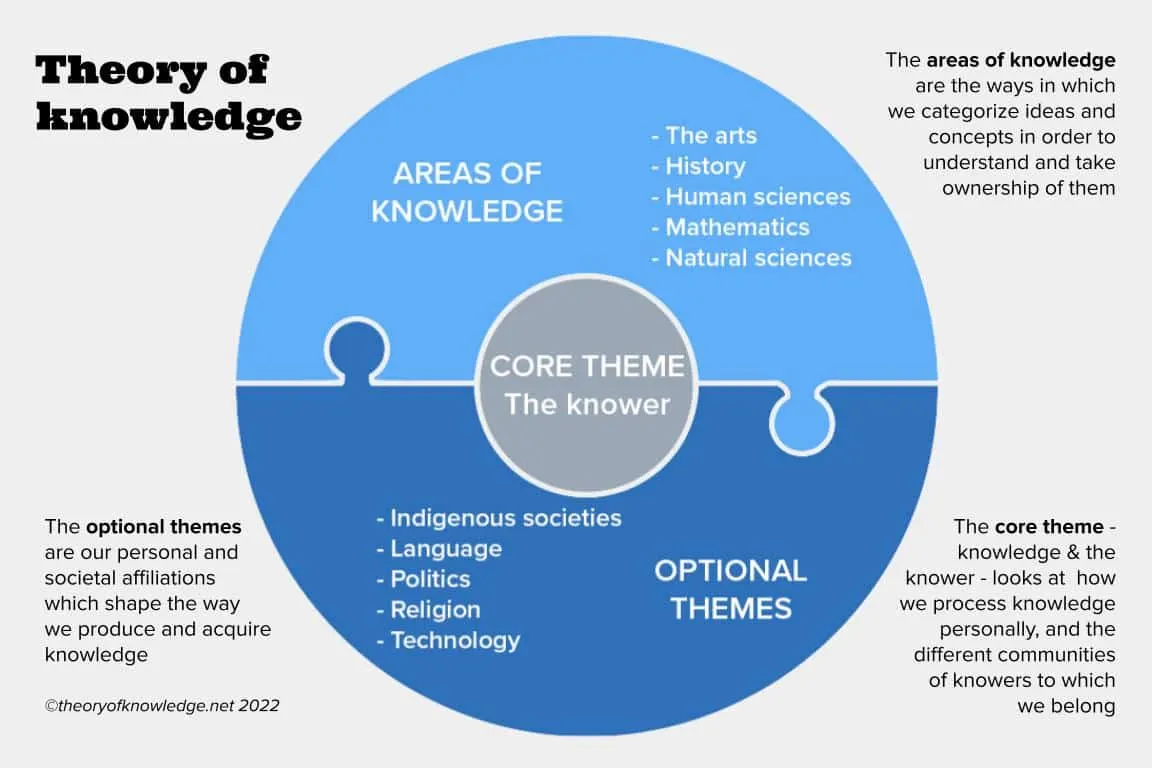
The TOK course is organised around three main components:
1. Core Theme: Knowledge and the Knower
This theme focuses on the individual as a knower: How do you acquire knowledge? What influences your perspective?
2. Optional Themes (Choose Two Out of Five)
- Knowledge & Technology
- Knowledge & Language
- Knowledge & Politics
- Knowledge & Religion
- Knowledge & Indigenous Societies
3. Five Areas of Knowledge (AOKs)
- History
- Human Sciences
- Natural Sciences
- The Arts
- Mathematics
These components are explored through four key elements: Scope – Perspectives – Methods & Tools – Ethics.
4. The 12 Key Concepts Across TOK
TOK is built around a common set of concepts that help students compare and explore different areas of knowledge:
Truth, Evidence, Certainty, Interpretation, Perspective, Culture, Justification, Objectivity, Power, Values, Explanation and Responsibility.
These concepts recur throughout the course and help students develop coherent, well-supported arguments.
5. Assessment
TOK has two main assessment components, rather than a traditional written examination:
1. TOK Exhibition (Internal Assessment – 1/3 of the TOK grade)
- Select one official TOK exhibition prompt.
- Choose three objects.
- Write a commentary of no more than 950 words.
- Explain the connections between each object and the selected prompt.
2. TOK Essay (External Assessment – 2/3 of the TOK grade)
- Maximum of 1,600 words.
- Choose one of six prescribed essay titles published by the IB.
- Compare knowledge across different Areas of Knowledge (AOKs), analysing claims and counterclaims.
6. How Does TOK Benefit DP Students?
- Strengthens academic writing and critical writing skills.
- Improves logical reasoning and argumentation, which are particularly valuable for the Extended Essay (EE) and other Higher Level (HL) subjects.
- Helps students critically evaluate misinformation, media narratives and bias.
- Contributes to students’ overall DP results through the TOK component of the Core points.
7. Suggested Classroom Activities for Teachers
- 10-minute debate: “Is there any Area of Knowledge that can offer 100% certainty?”
- Analyse a news article to identify bias and different perspectives.
- Keep a Knowledge Diary: Record one real-life example of knowledge each week.
Would you like Sarah Education to help you choose a suitable TOK essay topic? Send us a message to receive guidance from our team of academic specialists!