SERIES: IB ECONOMICS DECODED (PART 1)
What Do Students Actually Learn in IB Economics? When parents hear that their children are studying IB Economics, they often associate the subject with supply and demand, inflation, GDP, unemployment, exchange rates, and other economic concepts. That is certainly part of it. But there is much more to IB Economics than that.
What Do Students Actually Learn in IB Economics?
When parents hear that their children are studying IB Economics, they often associate the subject with supply and demand, inflation, GDP, unemployment, exchange rates, and other economic concepts.
That is certainly part of it. But there is much more to IB Economics than that.
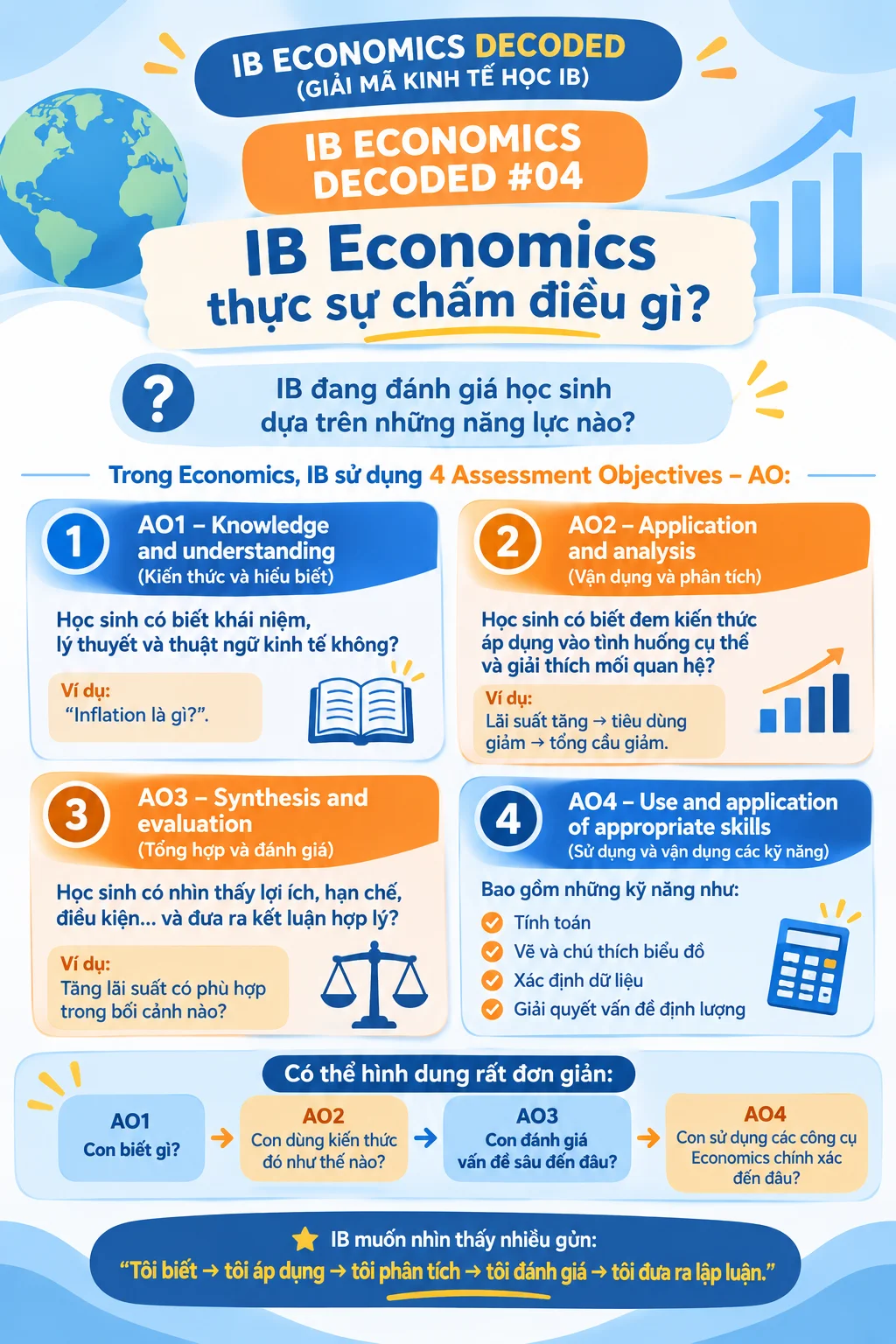
More importantly, IB Economics does not simply assess how much knowledge students have acquired. It assesses whether they can use economic knowledge to understand and address real-world issues.
Let’s consider a familiar real-world issue:
Imagine a country where a large proportion of the population leads a physically inactive lifestyle. The government wants to encourage people to exercise more.
At first glance, this may seem purely like a public health issue. However, from an Economics perspective, students may be expected to consider several questions:
- Does physical activity generate a positive externality?
- Is the market providing the socially optimal level of consumption?
- Why might individuals consume less than the socially desirable level?
- Should the government intervene?
- If so, which policies should it adopt?
- What are the potential costs and limitations of those policies?
- Are businesses operating in this market simply maximising profits, or are they pursuing other objectives?
This illustrates how a single real-world issue can involve several different areas of economic knowledge.
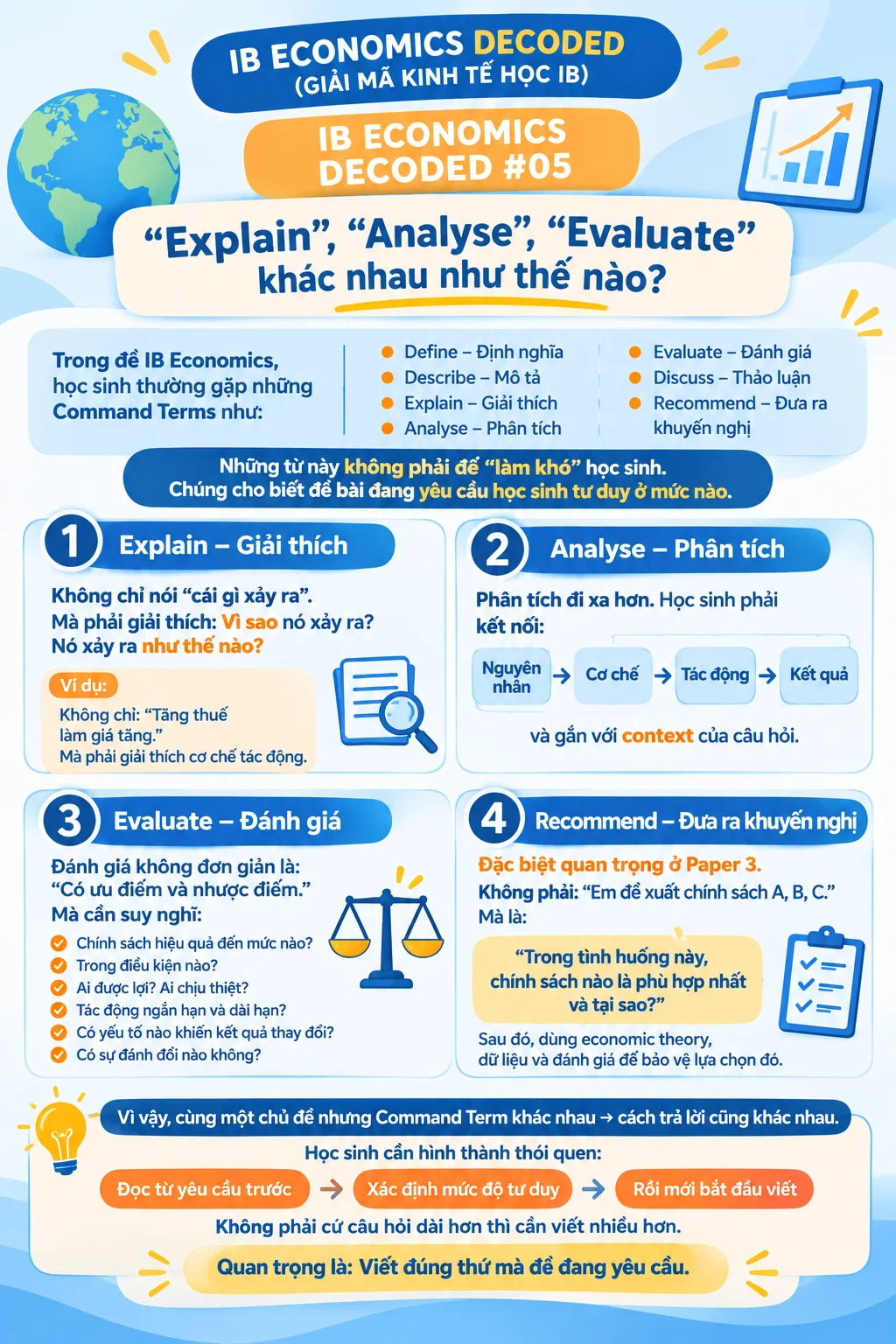
This is exactly how IB Economics encourages students to think:
Real-world issue
↓
Economic problem
↓
Economic theory
↓
Data / calculations
↓
Diagram / model
↓
Analysis
↓
Evaluation
↓
Policy recommendation
This is why a student can memorise a large number of economic concepts and still struggle to achieve high marks.
Knowing the definition of inflation does not necessarily mean being able to analyse an economy experiencing inflation. Understanding positive externalities does not automatically mean being able to explain why a market may provide less consumption than is socially desirable. Knowing a particular government policy does not mean understanding when it is appropriate, how it works, or what trade-offs it may involve.
So, what is the purpose of the four Units in IB Economics?
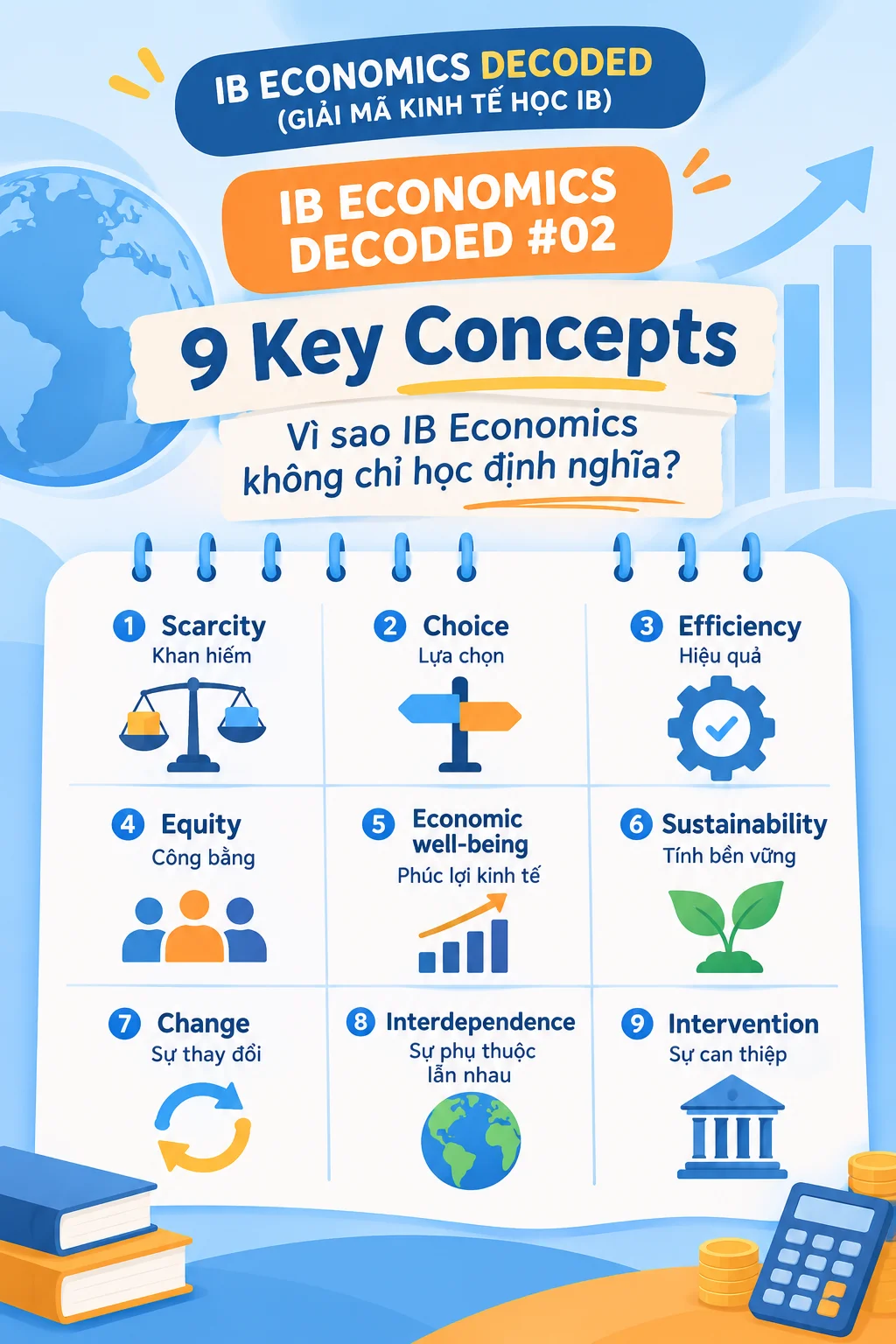
The IB Economics curriculum is organised into four main units:
Unit 1 – Introduction to Economics
Unit 2 – Microeconomics
Unit 3 – Macroeconomics
Unit 4 – The Global Economy
However, real-world economic issues do not neatly fit into four separate chapters. A single issue may simultaneously involve microeconomics, macroeconomics, international trade, government policies, and social welfare.
That is why IB encourages students to move beyond the question:
“What concepts are covered in this chapter?”
And instead ask:
“Which economic tools and concepts can I use to explain this issue?”
Put simply:
Studying IB Economics is about much more than memorising economic concepts.
The goal is to help students progressively develop the ability to:
Know → Understand → Apply → Analyse → Evaluate → Formulate Arguments.
This is also why IB Economics can be more challenging than it may initially appear from the textbook.
IB Economics does not simply ask: “What do you know?”
Increasingly, the more important question is:
“How can you use what you know to explain the world around you?”