OPTIONAL THEMES (PART 1): KNOWLEDGE & TECHNOLOGY AND KNOWLEDGE & LANGUAGE
OPTIONAL THEMES (PART 1): KNOWLEDGE & TECHNOLOGY AND KNOWLEDGE & LANGUAGE
OPTIONAL THEMES (PART 1): KNOWLEDGE & TECHNOLOGY AND KNOWLEDGE & LANGUAGE
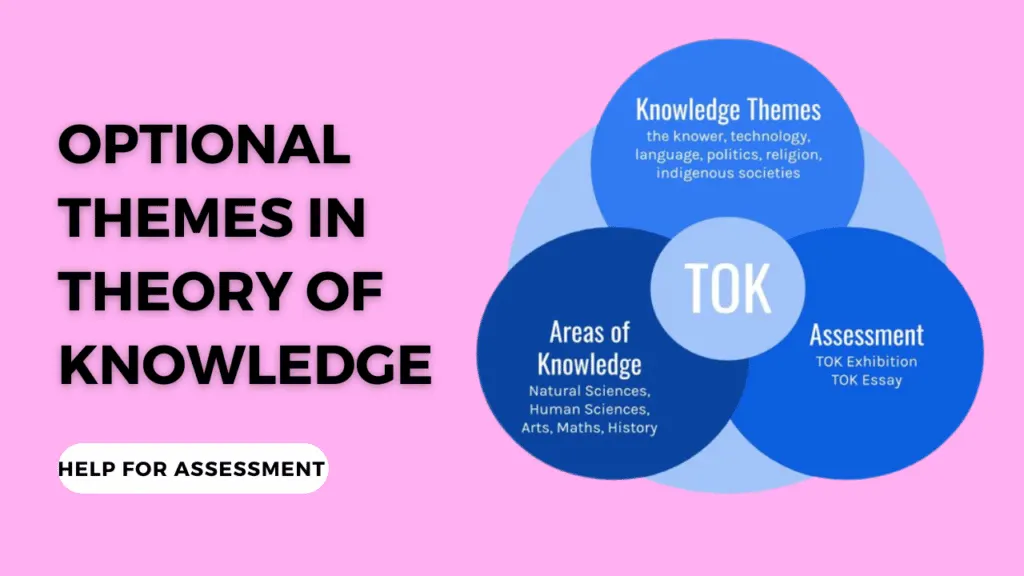
Optional Themes help students understand knowledge in real-world contexts, where technology, language, politics, religion and other factors directly influence the world around us.
In this article, we focus on two of the most widely explored themes in the global context of TOK:
Knowledge & Technology | Knowledge & Language
PART A – KNOWLEDGE & TECHNOLOGY
1. Why Is Technology an Important Theme?
Digital technology is transforming:
- The way we access information.
- The way we create knowledge.
- The way we interact with one another in society.
Today, knowledge is no longer simply “created by humans”; it is also collected, organised, recommended and prioritised by machines.
This raises some fundamental TOK questions:
Can machines “know”?
Does technology help us understand the world better, or does it make us more biased?
2. Key Issues in Knowledge & Technology
Algorithms and Bias
Algorithms used by platforms such as TikTok, YouTube and Facebook can create:
- Echo chambers.
- Excessive personalisation.
- Reinforcement of existing biases.
TOK Question:
If the knowledge I receive is shaped by algorithms, am I still “knowing” independently?
Technology and Evidence
Artificial intelligence (AI) can:
- Generate deepfakes.
- Produce fabricated data.
- Process big data on a scale beyond human capabilities.
This challenges our understanding of what constitutes reliable evidence.
Knowledge Ownership
Who owns knowledge generated by AI?
- The user?
- The company that owns the AI model?
- Or is it knowledge without an identifiable owner?
Can Machines “Know”?
Some fundamental TOK questions include:
- Does machine learning genuinely “understand”, or does it simply “calculate”?
- Can machines have a perspective?
- Can knowledge without consciousness still be considered knowledge?
3. Suggested Activities
- Analyse TikTok’s recommendation algorithm: “Why is everyone’s For You Page different?”
- Watch a deepfake video and discuss: “What counts as genuine evidence?”
- Compare Google search results using two different accounts.
PART B – KNOWLEDGE & LANGUAGE
1. How Does Language Influence Knowledge?
Language is the primary means through which knowledge is communicated. However, language is not a neutral tool; it carries:
- Culture.
- Perspectives.
- Metaphors.
- Values.
- Power.
Examples:
- An English word may have no exact equivalent in Vietnamese, making it difficult to convey its full meaning through translation.
- In science, terminology shapes how concepts are understood (e.g. “gene expression” and “immune escape”).
- In politics, word choices can influence how audiences feel and interpret events (e.g. “liberation” versus “invasion”, “freedom” versus “indiscipline”).
2. Key Issues in Knowledge & Language
Language Shapes Thought
The Sapir–Whorf hypothesis suggests that language influences the way we perceive and understand the world.
Example:
The Inuit languages are often cited in discussions about how different languages categorise snow, raising questions about whether linguistic distinctions influence the depth and detail of our knowledge about the natural world.
Interpretation & Meaning
Not every word conveys the same meaning in every context.
TOK Question:
Can a translation ever fully convey the knowledge and meaning of the original text?
Language and Power
Language can be used to:
- Persuade.
- Manipulate.
- Influence public opinion.
- Establish dominant narratives.
Examples:
- Media framing: “immigrants” versus “foreign workers”.
- Political language: Terms such as “stability”, “subversion” and “peaceful evolution”.
Language Loss = Knowledge Loss
When a language becomes extinct, the following forms of knowledge may also disappear:
- Cultural knowledge.
- Local ecological knowledge.
- Oral traditions and knowledge passed down through generations.
3. Suggested Activities
- Translate a poem into two different languages and compare the meanings.
- Analyse an advertisement: How does language shape the audience’s emotions?
- Compare two news reports covering the same event: Can word choices lead to bias?
Would you like Sarah Education to help you choose a suitable TOK essay topic? Send us a message to receive guidance from our team of academic specialists!